
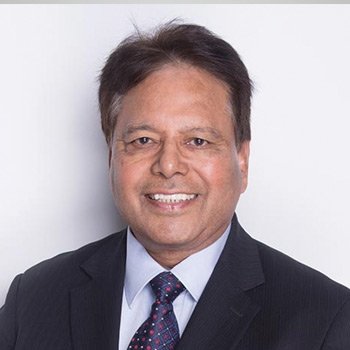
INTERVIEW : Dr. SUDHIR P. SRIVASTAVA
Dr. SUDHIR P. SRIVASTAVA, Founder, CEO and Chairman of SS Innovations Dr. Sudhir Srivastava is one of the foremost global experts in robotic cardiac surgery. Till date, he has performed the largest number of robotic cardiac procedures in the entire world. Dr. Srivastava, along with ten additional physicians, founded Alliance Hospital Ltd, a center of excellence in the treatment of cardiovascular disease, in Odessa, Texas in July 2003 and served as its chairman for four years. While there, he performed the world's first single vessel beating heart TECAB in the United States. Dr. Srivastava is an active member of the Society of Thoracic Surgeons, AATS, the International Society for Minimally Invasive Cardiothoracic Surgery (ISMICS) and is a founder of the Robotic Revascularization Society. Dr. Srivastava has made it his mission to make available his skill to all those with the desire to learn these minimally invasive techniques. He has trained hundreds of teams around the world and is constantly trying to find ways to improve the field of robotic assisted surgery. Alongside his tireless efforts and determination, Dr. Srivastava continues to push the envelope of surgical science as we know it today! Q. What does 'Make in India' denote for a genuine manufacturer like your organisation? For a genuine manufacturer, Make in India is far more than a mere slogan, it is a commitment to vision, innovation, and national pride. In our case, the SSI Mantra surgical robotic system represents the perfect embodiment of what 'Make in India' truly stands for. We did not import a system, rebrand it, or cosmetically modify it. Instead, we built one of the world's most advanced multi-arm surgical robots entirely through indigenous research, engineering, clinically validated and development conducted in India. Our journey began with a simple belief: India must not remain just a consumer of advanced medical technology. India must become a global creator. This required us to invest years into R&D, clinical validation, manufacturing infrastructure, rigorous testing, and regulatory pathways. We engaged Indian scientists, engineers, surgeons, designers, and software developers to build an ecosystem capable of supporting a product as complex as a surgical robot. Today, we are proud that the SSI Mantra platform is not only performing surgeries across India but has also begun its global footprint. For us, Make in India represents: True indigenous innovation rather than cosmetic assembly Engineering excellence built by Indian talent Accessible and affordable technology that can reach Tier 2 and Tier 3 cities An 'Atmanirbhar Bharat', where India leads from the front A commitment to serve humanity, not just the marketplace This is why misrepresentation of imported products is not just a commercial concern it undermines the spirit and sacrifices behind genuine Indian innovation. Q. How widespread do you think is the practice of mislabelling/relabelling imported products as 'Made in India'? While exact figures are hard to quantify, what we are witnessing is a concerning rise in the trend of relabelling fully imported medical devices as Indian-made. In some cases, products arrive fully assembled, undergo negligible local intervention, and are then branded as domestic innovations. Unfortunately, this practice is no longer limited to low-tier devices; even high-end high-value medical equipment is seeing such misrepresentation. This not only distorts healthy competition but also confuses hospitals and government entities that genuinely wish to support Indian manufacturers as part of the national policy agenda. As companies like ours invest years and significant capital into genuine manufacturing, relabelled imports dilute the credibility of true 'Make in India' efforts. Q. Why do you think unscrupulous elements are able to pass off imported products as Indian-made? How does this affect the market? Such entities exploit regulatory grey areas or gaps in enforcement. Importing a finished product and changing its exterior branding is far quicker than building an indigenous platform, especially something as complex as a surgical robot. Without rigorous verification mechanisms, these products easily enter the market under the light of Indian innovation. This affects the market in several harmful ways: 1. Unfair competition – Genuine manufacturers who take risks and invest heavily in R&D face artificially undercut pricing by relabelled imports. 2. Customer deception – Patients and Hospitals are misled into believing they are supporting Indian innovation when they are not. 3. Barrier to true innovation – When copying or relabelling is easier and more profitable than innovations, it discourages long-term research and indigenous manufacturing. 4. Risk to patient safety – Imported devices with unknown sources or poor traceability compromise clinical reliability. Ultimately, such practices harm the entire ecosystem, innovators, clinicians, patients, and India's global credibility. Q. How effective has the government been in addressing the issue of misrepresentation of imported devices? The government has shown strong intent in strengthening the medical device ecosystem, but enforcement still needs expansion. Frameworks like the Medical Devices Rules 2017, the Quality Management System (QMS) requirements, and the push towards domestic manufacturing are important steps. However, the openness of the Indian market means that unless regulators enforce strict origin verification, misrepresentation can easily slip through the cracks. That said, I believe the government is responsive, and our recent submission to CDSCO is to support this effort ensuring transparency, fairness, and accountability. Strengthening enforcement is not only in the interest of domestic manufacturers; it is essential for patient safety and national reputation. Q. What steps should regulators take to curb this practice and protect genuine domestic players in the interest of consumers? Several steps can significantly enhance transparency: Verifiable Local Value Addition – Mandate quantifiable thresholds, not just documentation to verify real local manufacturing. Full Disclosure of Origin: Manufacturers must clearly declare the origin of their: Components l Subsystems Firmware l Hardware architecture Periodic Audits: Surprise inspections of manufacturing sites will prevent token local activity from being presented as full manufacturing. Stringent Penalties for Misrepresentation – A strong deterrence mechanism is essential to dissuade relabelling malpractice. Traceability Standards – Every major device should have a traceable history from component sourcing to final assembly. These measures will promote a fair, transparent market that rewards real